What infrastructure does AI research and education really need?
Registration ends April 2
Dr. Valerie Taylor (ANL) to Present Keynote at 6th Chameleon User Meeting
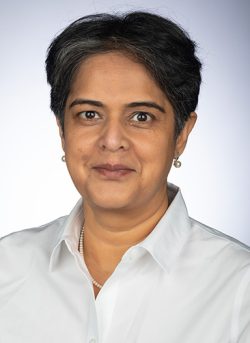
We're excited to announce that Dr. Valerie Taylor, Director of the Mathematics and Computer Science Division and a Distinguished Fellow at Argonne National Laboratory, will give the featured keynote at our upcoming User Meeting.
Her research is on high-performance computing, with a focus on energy efficient methods and the use of Large Language Models for parallel, scientific code generation. As head of CMD-IT, Dr. Taylor has also spent her career championing broader participation in computing. We're excited to feature her perspective on the future of infrastructure for AI research and education.
Talk - Utilizing LLMs for Refactoring of Parallel Scientific Codes for Energy Efficiency: Large language models (LLMs) are increasingly used for generating parallel scientific codes, with most efforts focused on functional correctness. While functional correctness is important, it is recognized that performance, especially energy efficiency, is also important. This talk with focus on an automated LLM-based refactoring framework that generates energy efficient parallel codes using a multi-stage, interactive approach. The framework, called LASSI-EE, integrates runtime power profiling, energy-aware prompting, self-correcting feedback, and an LLM-as-a-Judge agent for automated screening of code solutions. This talk will present results from using LASSI-EE on scientific benchmarks and application on NVIDIA A100 and AMD MI100 GPUs available on the Chameleon Cloud. LASSI-EE can deliver close to a factor of three improvement in energy efficiency as compared to vanilla LLM prompting.

Join us in Boulder, Colorado for two days of community discussion on AI and machine learning infrastructure for research and education. The User Meeting brings together everybody - from newcomers to veterans, researchers to educators - to share experiences, tackle challenges together, and propose features that will shape the testbed's future.
This year's meeting is co-hosted with the National Center for Atmospheric Research (NCAR) at its main campus in Boulder, CO - an official Chameleon site and partner since Phase 4.
What to Expect
Day 1 (April 15) features keynote speakers and lightning talks from Chameleon users sharing project details, lessons learned, and infrastructure insights from real AI/ML work on the testbed, followed by panel discussions.
Day 2 (April 16) features live tutorials from Chameleon staff and mini-symposia on special topics, including AI education infrastructure and AI-assisted reproducibility (see the Mini-Symposia tab).
Present at the Meeting
SUBMISSIONS CLOSED
We invite researchers and educators using Chameleon to submit a 2-page presentation proposal. The top 10 selected presenters receive up to $1,500 in travel reimbursement. See the Call for Presentations tab for submission instructions.
Call for Presentations: Chameleon User Meeting 2026
SUBMISSION IS NOW CLOSED
The Sixth Chameleon User Meeting will be held April 15-16, 2026 at the NCAR Mesa Lab in Boulder, Colorado. This year's meeting's theme focuses on computer science research and education in Artificial Intelligence (AI) and Machine Learning (ML). The objective of the meeting is to create a community discussion on AI research, approaches to education, and most importantly what platform you need - or may need in the future - to solve the hard problems and train the workforce of the future. We invite researchers and educators using Chameleon to submit presentation proposals sharing their experiences. Come to network with scientists working on similar topics, share tips on how to muster resources and data for hard-to-get experiments, and find materials and digital artifacts to teach AI classes!
As in previous years, we will reimburse travel expenses of up to $1,500 for the presenting authors of the top 10 selected abstracts (one author per abstract).
Important Dates
- Submission deadline:
February 16, 2026at 11:59 PM (any time zone on Earth) - Acceptance notification:
February 19,February 20, 2026 - Submit by sending mail to: presentations@chameleoncloud.org
Submission Instructions
Email your final submissions to presentations@chameleoncloud.org before the deadline.
Presentation proposals should be submitted as PDF documents, 2 pages in length, and include:
- Presentation title
- Author/Presenter name(s) and affiliation(s)
- Chameleon project ID(s) under which work was carried out
- Contact email
- If your presentation gets accepted, would you be interested in submitting a full paper? (Please put a statement, e.g., "Interested in full paper submission")
We are particularly interested in presentations that address AI and ML research on cloud testbeds. While we expect you to explain enough about your research or education projects to make the platform requirements clear, we also want you to save the important results for sharing at high ranking research conferences - your submissions here should focus on infrastructure requirements (hardware, configuration, etc.), experimental apparatus, challenges, and lessons learned.
Your proposal should address the following:
1. Project Overview. Briefly describe your research project or educational activity. What problem are you addressing? What is your approach?
2. Infrastructure Requirements & Usage. What specific Chameleon capabilities did you leverage? This might include:
- Hardware configurations (GPU types, accelerators, bare metal access)
- Networking and storage requirements
- Software stack control and customization
- Reproducibility features
- Heterogeneous resources and their management
3. Challenges & Insights. What worked well and what didn't? Where did you encounter bottlenecks or limitations -- whether in hardware availability, configuration complexity, software maturity, or experimental workflow? What was particularly valuable (and we should do more of) and features or capabilities are missing? How did Chameleon's capabilities compare to other public clouds and/or commercial cloud platforms for your specific needs?
4. Services, Tools & Workflow Support. What services or tools (beyond raw infrastructure) were critical to your work? This might include orchestration platforms, experiment management systems, data pipelines, reproducibility frameworks, or user interfaces. Where did existing tooling fall short? What gaps exist between infrastructure capabilities and researcher-friendly workflows?
We especially encourage submissions that:
- Provide detailed, specific insights about infrastructure requirements for AI/ML workloads
- Discuss challenges unique to AI research and education
- Represent diverse AI/ML domains (robustness/safety, sustainability, systems optimization, federated learning, education, etc.)
- Offer concrete recommendations for testbed evolution
Review & Selection
Submissions will be reviewed and ranked by a program committee to be announced soon. Selection will be based on the depth of infrastructure insights, relevance to the AI/ML research community, potential to inform testbed development, and contribution to productive discussion.
Travel Support
For the top 10 selected abstracts, we will reimburse travel expenses of up to $1,500 for one presenting author per abstract. Submitting a presentation proposal serves as your travel support application. Reimbursement covers transportation, lodging, and meals for attendance at the User Meeting.
What to Expect After Acceptance
Accepted presenters will be expected to:
- Attend the User Meeting in person
- Deliver a ~15-minute presentation on the morning or afternoon of April 15th
- Participate in a panel discussion following the presentation sessions
- Contribute insights to a post-meeting community report documenting infrastructure requirements, challenges, and recommendations for advancing AI research testbeds
This report will be published and shared with the research community to guide future development of Chameleon and similar cyberinfrastructure.
Program
Pre-Event April 14th, 2026
Day 1 April 15th, 2026
- 9:00 – 9:10 AM: Welcome and Introduction to the Workshop — Kate Keahey, Chameleon PI (University of Chicago/Argonne National Laboratory)
- 9:10 – 9:30 AM: Academic Research in the Age of AI (virtual presentation) — Deep Medhi, National Science Foundation (NSF)
- 9:30 – 10:00 AM: Chameleon: Looking Forward, Looking Back — Kate Keahey
- From RC Cars to Robot Arms: Extending Embodied AI Education on Chameleon Cloud — Rick Anderson (Rutgers)
- On Teaching “Decentralized Machine Learning Systems”: Lessons and Outcomes — Nathaniel Hudson (Illinois Tech)
- Adaptive ML Systems on Research Testbeds: Infrastructure Lessons — Pooyan Jamshidi (University of South Carolina)
- Teaching and Learning ML Ops/Systems on Chameleon — Fraida Fund (NYU)
- Unified System- and Network-Level Monitoring for AI-Driven Anomaly Detection on Chameleon Cloud — Arin Rahman (UTEP)
- OpenMCP: A Reproducible Benchmarking Harness for Evaluating Computer-Use Agents on Chameleon Cloud — Agu Leon (NYU)
- Learning Directed Operating Systems (LDOS): Opportunities and Challenges — Sujay Yadalam (UT Austin)
- Kiso: Orchestrating Distributed Edge-to-Cloud AI Experiments on Chameleon and Chameleon Edge — Rajiv Mayani (USC – ISI)
- Lessons Learned from a Multi-Model Question Answering Pipeline on the Chameleon Testbed — Deshan Wattegama (Missouri)
- Open-Source Chip Prototyping and PPA Analysis on Chameleon — Connor Bohannon (ANL)
- Evaluating Dependency Gaps in LLM-Generated Code — Bhanu Vangala (Missouri)
Day 2 April 16th, 2026
- 8:30 – 9:30 AM: Getting Started with Chameleon
Marc Richardson, Project Manager
A hands-on walkthrough of getting started with bare-metal provisioning on Chameleon. - 9:30 – 10:00 AM: When to Go Virtual: KVM on Chameleon
Mark Powers, DevOps
Learn when and how to use KVM virtual machines on Chameleon and what features they offer beyond bare metal. - 10:00 – 10:30 AM: Break
- 10:30 – 11:30 AM: Science at the Edge: Edge-to-Cloud Experiments with Chameleon
Michael Sherman, Site Lead
Set up and run experiments spanning edge devices and cloud resources using CHI@Edge. - 11:30 AM – 12:00 PM: Managing and Sharing Digital Artifacts on Chameleon
Paul Marshall, Sr. Research Engineer
Best practices for packaging, sharing, and reusing experiment artifacts.
Applying AI to Accelerate Computational Reproducibility and Replicability
Chair: Tanu Malik, University of Missouri
- Jay Lofstead, Sandia National Laboratories
- Odd Erik Gundersen, NTNU
- Daniel Acuña, UC Boulder
- Victor Weeks, NCAR
- Parmanand Sinha, University of Chicago
- Bogdan Alexandru Stoica, UIUC
Teaching AI in the Real World
Chair: Fraida Fund, NYU Tandon
- Rick Anderson, Rutgers
- Pooyan Dermani, University of South Carolina
- Nate Hudson, Illinois Tech
- Mark Zhao, CU Boulder
- John Weatherley, CU Boulder (iSAT)
- Nikhil Krishnaswamy, Colorado State (iSAT)
- Sujay Yadalam, UTexas
Mini-Symposia
Mini-Symposia will take place in the afternoon of Day 2 of the User Meeting (April 16). No additional registration is necessary.
Teaching AI in the Real World: A Community Conversation
The AI Education Mini-Symposium will bring together educators teaching AI and machine learning to explore infrastructure needs that go beyond standard classroom resources. Instructors will share their experiences teaching AI/ML courses, followed by a panel discussion on current teaching challenges and unmet infrastructure needs.
We're particularly interested in understanding what educators need to effectively teach AI concepts that existing platforms (Google Colab, institutional HPC, commercial clouds) cannot easily support. The symposium will bring perspectives from diverse educational contexts to capture the full spectrum of teaching needs in AI education.
Applying AI to Accelerate Computational Reproducibility and Replicability
Reproducibility and replicability (R&R) are cornerstones of scientific research, enabling validation, trust, and enhancing community knowledge. In computer science, conferences have played a central role in advancing R&R through formal Artifact Description (AD) and Artifact Evaluation (AE) processes. Despite significant community effort, reproducing CS artifacts remains challenging due to complex dependency chains, evolving software stacks, specialized hardware requirements, and the use of sophisticated experimental platforms and testbeds.
This session will explore how AI can strengthen R&R in CS research, with particular focus on the infrastructure demands of conference AE/AD processes. Beyond code analysis or automated testing, we are interested in exploring how AI can function as an adaptive infrastructure layer: intelligently reconstructing experimental environments, automatically resolving dependency conflicts, and navigating platform-specific quirks. The session will convene researchers and practitioners to identify concrete opportunities, challenges, and best practices, culminating in a working paper on AI-assisted reproducibility infrastructure for CS conferences.
Registration for the 6th Chameleon User Meeting
Free student tutorial pass now available
Venue and Travel
On this page
- Conference Location
- Getting to the Mesa Lab
- Getting to Boulder
- Staying in Boulder
- Getting Around and Enjoying Boulder
- Weather and Altitude

Getting to the Mesa Lab
The Mesa Lab is on the side of a mountain and is not easily accessible by walking or biking. There are no public buses that go directly to the Mesa Lab. If you don't have a vehicle, plan to arrive via rideshare.
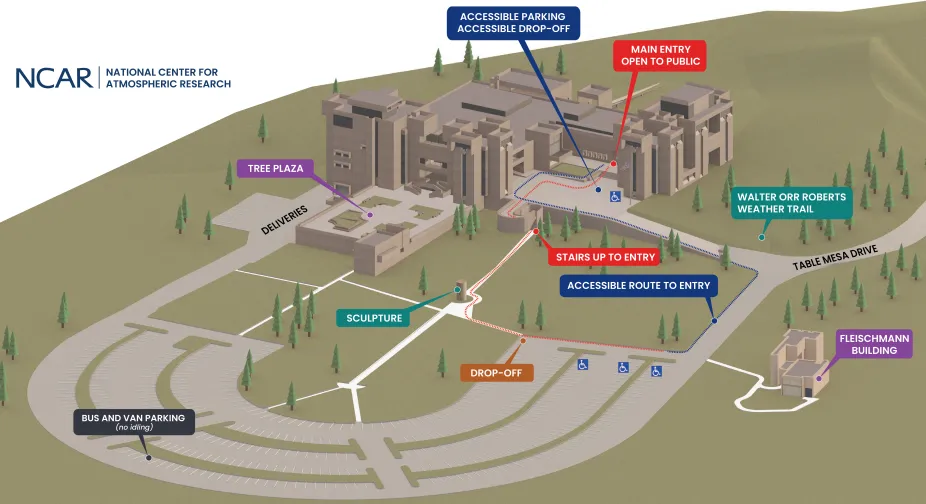
The parking lot is large and open to the public. It is a 5-10 minute walk from the lot up to the main entrance. See the Things to Know About the Mesa Lab page for cafeteria and other visitor info.
Getting to Boulder
Denver International Airport (DIA) is 45 miles from NCAR. Options for getting to Boulder:
- RTD Denver AB Bus (westbound) - the least expensive option, leaves the airport every half hour and stops throughout Boulder. Use RTD's Trip Planner for routes throughout the Boulder region.
- Lyft / Uber - commonly used but expensive (~$80 each way). Rideshare is widely available in Boulder.
Staying in Boulder
- Fairfield by Marriott Inn & Suites Boulder (10 minute drive to Mesa Lab)
Click here to reserve
5397 South Boulder Road, Boulder, CO 80303
Discounted rate: $125/night (incl. taxes & fees)$139 regular
Last day to reserve: March 25 - The Residence Inn Boulder (14 minute drive to Mesa Lab)
Click here to reserve
3030 Center Green Drive, Boulder, CO 80301
Discounted rate: $122/night (incl. taxes & fees)$143 regular
Last day to reserve: March 31
Getting Around and Enjoying Boulder
- Boulder Visitor Information - restaurants, alternative hotels, and things to do
- HOP Bus - gets to popular attractions, arrives every 7-15 minutes (City of Boulder transit info)
- B-Cycle - non-profit bike share with 41 stations. Use promo code UCAR30 for a free monthly pass (deselect auto-renewal when signing up)
- Lime - e-scooters in East Boulder, must be ridden on multi-use paths and bike lanes
- Boulder Open Space & Mountain Parks - hiking
Weather and Altitude
Boulder weather changes fast - dress in layers. Afternoon thunderstorms are common even on warm days, and temperatures drop quickly at night, especially at elevation. Keep a sweater and rain gear handy when hiking.
Boulder sits at 5,430 feet (1,655 m) above sea level. Stay hydrated, wear sunscreen and sunglasses, and drink plenty of water in the days before arrival - especially if coming from a lower elevation. Some visitors experience headaches, dizziness, or fatigue until they acclimatize.
Dress code at the Mesa Lab: Casual.
Contact Us
Sponsorships
We are seeking sponsors for the 6th Chameleon User Meeting! See sponsorship levels offered below. The deadline to commit is April 2nd.
Why Sponsor the Chameleon User Meeting?
Chameleon is one of the largest and most active NSF-funded research platforms in the United States, with 13,500+ users across hundreds of institutions who have collectively produced 1,000+ publications across 1,500+ projects. Sponsoring the 6th User Meeting puts your organization in direct conversation with this community.
The meeting produces a community report on AI infrastructure needs for CS research and education, which will be widely shared with researchers, educators, and policymakers. Sponsors gain visibility in a document that shapes how the field thinks about the future of AI infrastructure — and among the people who build it.
Who Attends
We expect 75–125 participants representing the full breadth of US academic computing — from R1 research universities to community colleges. Attendees include:
- Faculty and researchers running active AI and ML projects on cloud testbeds
- Graduate students and early-career scientists building the next generation of AI systems
- Educators developing AI curriculum and infrastructure for classroom use
- Research computing professionals supporting AI workloads at their institutions
The 6th Chameleon User Meeting runs April 15–16, 2026 at NSF NCAR's Mesa Lab in Boulder, CO. Day 1 features research and education presentations from Chameleon users followed by panel discussions, capped by a keynote from Dr. Valerie Taylor (Argonne National Laboratory) on using LLMs for energy-efficient scientific code refactoring. Day 2 offers hands-on tutorials and parallel mini-symposia on AI education and computational reproducibility — working sessions designed to surface real challenges and feed directly into the community report.
Sponsorships provide essential support for travel and conference fees for presenters, students, and early career scientists.
Chameleon Builder
$1,000
- 5-minute vendor talk at lunch
- 2 free registrations (a $300 value)
- Space for promotional materials
- Logo on event signage
- Social media recognition
- Logo on meeting website
- Recognition in the post-event community report
Chameleon Supporter
$500
- Logo on event signage
- Social media recognition
- Logo on meeting website
- Recognition in the post-event community report
Sponsorship slots are limited. To ensure inclusion in event signage and the printed program, please commit by April 2, 2026.